All across the world, goods are being transported and shipped at this very moment, and they need protection from water and weather while they’re in transit. Shipping containers are far and away the most popular way to do so. Since their introduction in the 1950s, shipping containers have revolutionized world commerce through their durability and convenience.
Since Air Sea Containers is a leading supplier of new and used shipping containers for businesses, one of the questions we hear most often from our customers is whether or not shipping containers are watertight. In many cases, the answer is yes—but we want to take a deeper look at the complexities of this question to help keep our readers informed.
Why Would You Need a Watertight Shipping Container?
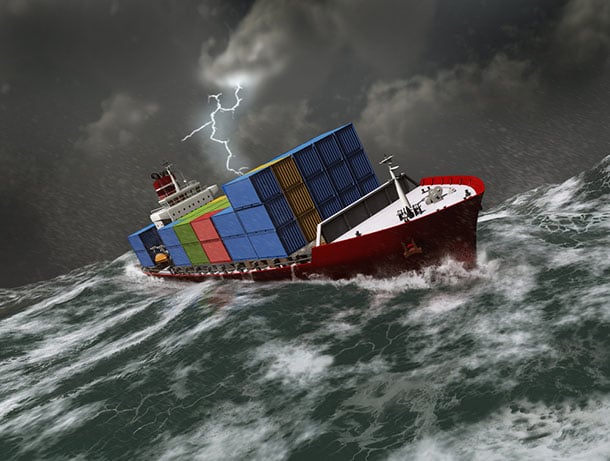
Simply put, watertight shipping containers are often essential because of the weather conditions that they have to endure. A shipping container might encounter furious waves on the deck of a ship, or a pounding rainstorm while on the back of a truck or rail car. Either way, shipping containers often need to stand up to the worst that nature has to offer.
Watertight vs. Waterproof
Let’s quickly establish the difference between the terms “watertight” and “waterproof” because they can actually mean quite different things.
The term “watertight” has a precise meaning–i.e., that no water can enter the container in question. If you see the term “watertight” used to refer to a shipping container, you can be reasonably sure that it’s claiming to give your goods total protection (although it’s still important to buy from a trusted supplier).
“Waterproof” can sometimes have a variety of different meanings, depending on who uses the term. When used to refer to shipping containers, “waterproof” can mean completely watertight, or it can mean that the container has had a hydrophobic coating applied to its outside. This helps prevent water from pooling on the container, but it doesn’t always mean that the container is truly watertight.
So, Are Shipping Containers Watertight?
Time for the question of the hour: Can you count on a shipping container to provide watertight performance for your goods?
In many cases, the answer is yes. Most new shipping containers are manufactured with durable rubber seals around their doors that prevent any water or moisture from entering the conversation. Because most containers only have openings on one side, they can effectively block out water by fortifying the area around their doors.
However, not all containers you’ll see on the market are watertight. Containers with damaged seals are often resold at a discount in “as-is” condition, and these often don’t offer the same level of protection. The bottom line is that it’s critically important for any shipping container buyer to work with a reliable shipping container supplier and ask detailed questions about the container’s condition before purchase.
Shipping Containers and Condensation
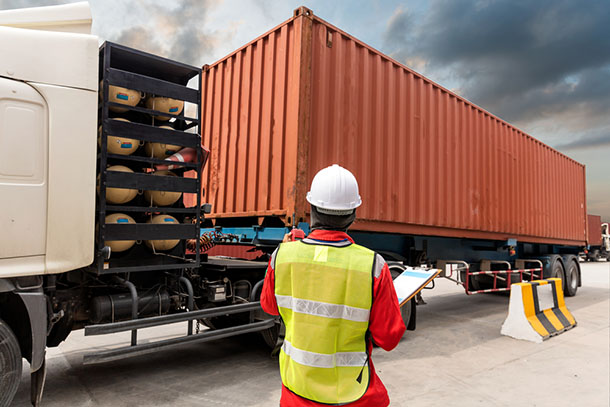
Condensation, the phenomenon by which moisture cools and becomes liquid water, can also be an important factor in determining a container’s water resistance. In some older shipping containers, moisture can sneak in when the container sits on the ground and is subjected to temperature changes.
Even watertight containers aren’t always completely immune to this phenomenon, so shippers with cargo that’s highly vulnerable to water might need to take additional steps to protect their goods. The newer the container, however, the better its resistance to condensation will likely be.
Other Ways of Improving Water Resistance
Other options exist for businesses that need to improve their shipping containers’ resistance to water and weather, particularly when dealing with situations in which condensation is likely. One of the simplest and best options can be to use plastic pallets rather than wooden ones, as plastic pallets resist absorbing moisture from condensation in ways that wooden pallets don’t.
Silica and calcium chloride desiccants are also popular moisture control options. These desiccants are available in “sticks” and “blankets” that can be added inside the shipping container to absorb moisture. Finally, individual goods can also be packed in moisture control materials such as vermiculite to help protect them.
Watertight Shipping Containers from Air Sea
Air Sea Containers makes it easy to find a new or used shipping container that will protect your cargo from water. With secure flooring and ceilings, as well as secure locking mechanisms, our containers are both wind and watertight and provide excellent protection against water and weather.
Note that you’ll need to choose the “Cargo Worthy” option when requesting a quote if using the container for marine transportation. This designation certifies that the container has been inspected to the standards of the Institute of International Container Lessors (IICL), the organization that sets container performance standards for international marine container transport.
Air Sea is your one-stop source for shipping containers, packaging materials and much more. Do you have questions about our products, or need help with finding your shipping container solution? Call us at (866) 596-9448 or contact us online!