
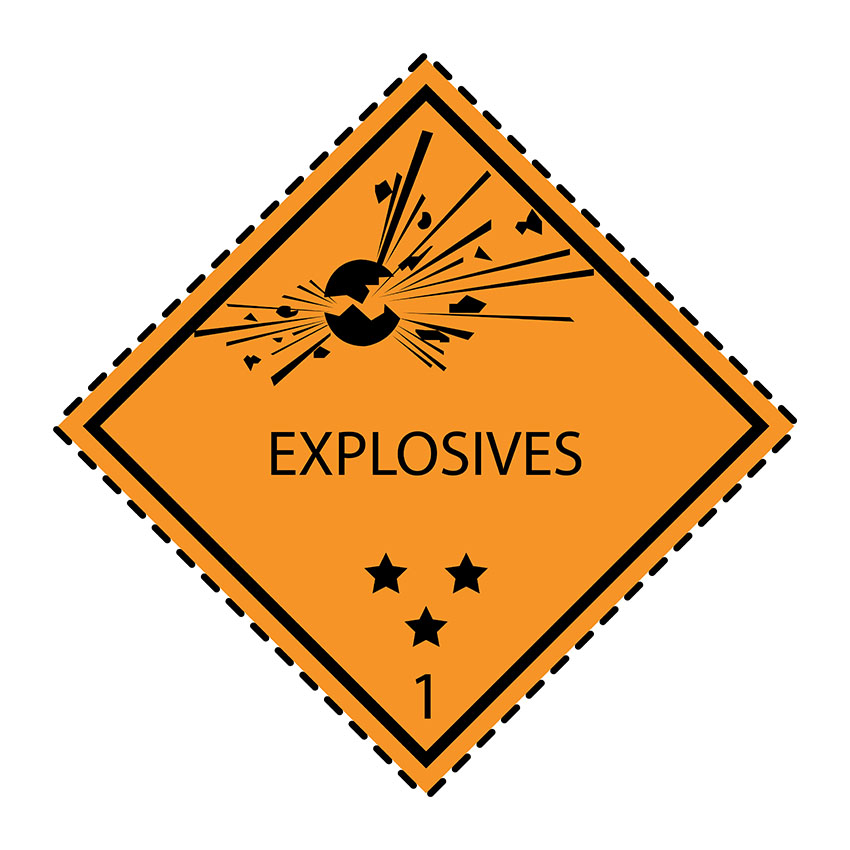
What Falls Under Hazard Class 1?
Hazard Class 1 is a broad category that covers many types of items. Some are among the world’s most sensitive and dangerous explosives, and some pose relatively low risks. Thus, it’s vitally important to know the specific regulations for the sub-divisions you’re working with. Common categories of items that fall into Hazard Class 1 include:- Commercial and industrial high explosives
- Ammunition
- Fireworks
- Flares
- Ignition devices
- Airbag inflators
- 1.1: Items with the potential for large and extremely dangerous explosions
- 1.2: Items with potential for projection and shrapnel danger, but not mass explosions
- 1.3: Items with a fire hazard and some combination of minor blast and projection hazards
- 1.4: Items with only a minor fire hazard
- 1.5: Items that present a mass explosion hazard but are less sensitive
- 1.6: Items that are less sensitive and also have no mass explosion hazard
Basic Shipping Requirements for Hazard Class 1
The most important general rules for Class 1 hazmat shipping include:- With some minor exceptions in class 1.4, most Class 1 hazmat goods cannot legally be mailed via standard air or ground postal services. They must be transported by a DOT-licensed hazmat carrier.
- All Class 1 hazmat materials, no matter their shipping method, must have Hazard Class 1 placards or labels.
- Any employee working with Class 1 hazmat goods must either be fully trained for their specific job function or work under direct supervision of someone who is.
- Transportation employees such as truck drivers must be DOT-licensed for hazmat transport.
How Air Sea Can Help You Ship Your Class 1 Hazmat Goods Safely
Safe and compliant packaging is one of the most important areas of hazmat shipping. That’s where we come in—Air Sea Containers is proud to be an industry leader in packaging solutions for hazmat shipping, and we’ve got over 20 years of experience and thousands of satisfied customers to our name. Our philosophy is to give our customers all the materials they need for safe hazmat shipping at every stage of the process. Some of our most popular hazmat shipping solutions include:- UN 4GV-certified corrugated boxes and complete 4GV hazmat shipping kits that include overpack boxes and safety-enhancing packing materials such as vermiculite
- A full selection of hazmat placards and labels for all hazmat shipping categories, printed on durable peel-and-stick vinyl
- UN and DOT-compliant hazardous waste shipping materials
- A complete range of hazmat shipping codes in print, including the CFR and IATA regulations
- Cushioning materials like biodegradable air pillows and dunnage airbags to help protect hazmat packages from dangerous impacts
- Reusable gel packs and other temperature regulation devices for temperature-sensitive cargo
- Hazmat shipper's declaration forms to keep your shipments in compliance and ensure that all regulations are met
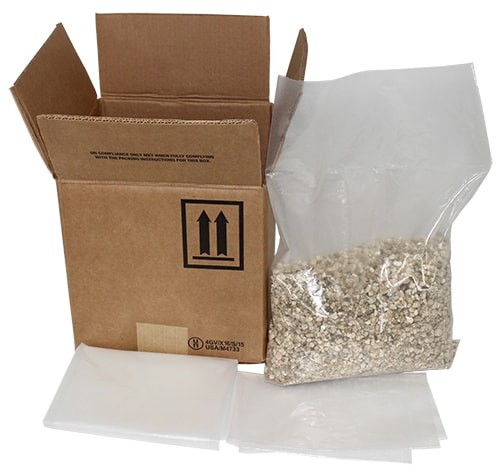
Air Sea 4GV Shipping Kit with Vermiculite
Whatever the specific needs are of your Hazmat Class 1 goods, Air Sea can help you devise a safe and efficient shipping solution. Not quite sure what materials you need or interested in getting a quote? Call us at (866) 596-9448 to get started or contact us online!